Panel reviews AMR response-time dip in June
A Newington EMS oversight committee reviewed six months of AMR ambulance compliance data and found a summer dip below target.
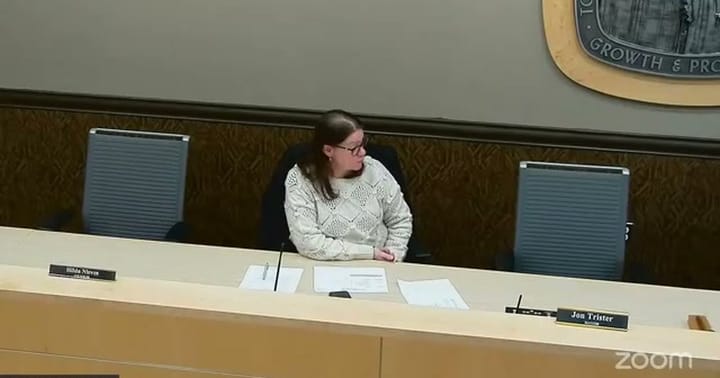
Other Committee · Meeting of October 15, 2026
NEWINGTON — A Newington EMS oversight committee reviewed six months of AMR ambulance compliance data and found a summer dip below target. AMR representative Kate told the panel June compliance fell to 87.7 percent, driven by a priority-two rate of 82.8 percent, as monthly call volume jumped to 195 calls, up from 146 the prior June. She called it "one of the busiest summers that I've worked" in nearly 29 years with the company.
Members also questioned a flagged April call with a 25-minute, 54-second response time, logged as incident ED 289-09-638, which Kate said she could not fully explain without further research. With member Scott Mangan of Newington Emergency Medical Services absent, the committee agreed to reach out to him for an update on a stalled data-integration project and the town's pending AMR service contract. The panel's next meeting is set for January 21, 2027.
In the full story:
- Who Was There
- Organizations And Documents Referenced
- The complete report — 1,863 words
Source: the Other Committee meeting of October 15, 2026, reported from the official video recording and transcript.
The Full Article
Call to Order, Roll Call and Routine Approvals
The committee convened at 6:02 p.m. with members joining both on Zoom and in person. A roll call identified William, Diane and Michelle as present; member Scott Mangan was marked absent. Kate, identified as an American Medical Response representative, and a second attendee named Matt were also noted present. The body approved its agenda and the minutes of its prior meeting by voice vote without discussion, consuming only the opening minutes of the meeting. Public participation drew no speakers in the room or on Zoom.
AMR Compliance Reports: Six Months of Response-Time Data
Background and stakes: The committee reviews monthly compliance reports from AMR as part of its ongoing oversight of the town's ambulance service contract. Members said they had already received the reports by email before the meeting and asked Kate to walk through the numbers live so the group could discuss specifics.
The question before the body: Members were being asked to review AMR's self-reported response-time compliance for April through September and decide whether any months warranted further inquiry.
Substantive content: Kate reported total compliance above 92 percent in April, with both priority-one and priority-two calls individually above that threshold. May held near 90 percent across categories. June marked the low point of the period: priority-one compliance at 90 percent, priority-two compliance at 82.8 percent, and total compliance at 87.7 percent, below the committee's target. Kate tied the dip partly to volume, noting June's call total of 195 was roughly 20 calls above the six-month average. July showed continued softness, with total compliance at 89 percent and priority two at 82 percent. August improved to 90 percent total compliance, with priority two still slightly below target at 88.9 percent. September returned fully within target: 93 percent priority one, 91 percent priority two, 92 percent total.
Kate also supplied year-over-year comparisons on request. June 2025 saw only 146 total calls, well within target compliance, against June 2026's 195 calls, a difference she and a member calculated as roughly a 30 percent increase. July 2025 had 174 calls with priority-two compliance dropping into the mid-80s; August 2025 had 164 calls with priority-two compliance at 85 percent. Kate said each instance of below-target compliance in the data set traced to priority-two calls specifically, with priority-one compliance holding up across the full period.
The deliberation: A committee member asked directly why this summer's dips appeared deeper than in previous years. Kate said she could not produce exact comparative statistics on the spot but offered context from her own tenure.
"I will say that this summer was one of the busiest summers that I've worked, and I've been with the company for almost 29 years," Kate said, adding that daily 911 call volume ran between 106 and 180 calls across the system during the period in question.
Procedural steps and outcome: No vote was taken on the compliance reports; the discussion was informational, and Kate offered to follow up on specifics the committee wanted documented further.
Implications and what is next: The June dip stands as the most significant deviation from target in the six-month window reviewed. The committee did not set a follow-up deadline for additional data but left the door open to revisit the Berlin Turnpike mapping question and the specific flagged call described below.
The Flagged Call: ED 289-09-638
Background and stakes: Within the broader compliance discussion, a member raised a specific delayed response recorded in the April report that did not match current contract terms, prompting a closer look at one incident.
The question before the body: Members wanted to know why a particular priority-one call showed an extended response time, and whether that time was fairly counted against AMR's compliance numbers.
Substantive content: The call, logged under incident number ED 289-09-638 and dated April 20, showed a response time of 25 minutes and 54 seconds, which Kate confirmed was a priority-one call. She noted it occurred at 1732 hours, about 32 minutes after two other priority-one calls at 1646 and 1659 hours, meaning AMR handled three stacked priority-one responses within roughly an hour. Kate explained two possible, contractually excusable explanations for an apparently long response: the call may have been downgraded by dispatch from priority one to priority two without AMR's CAD record being updated to reflect that change, or AMR crews may have been told to stage outside a scene before entry, meaning the recorded "on-scene" time reflects travel to the staging location rather than the actual address.
The deliberation: Kate was candid that she did not know which explanation, if either, applied to this specific call without further research.
"That spreadsheet also won't say whether or not it was downgraded, and if my crew said it was downgraded on the radio," Kate said, describing the limits of what the compliance data alone can show.
A Police Department representative in the room added procedural detail on how Newington's dispatch system assigns priority, noting that initial priority codes come from medical dispatch protocols but can be overridden by on-scene personnel or police requesting a different response level, which can create discrepancies between what a spreadsheet shows and what actually happened on scene.
Procedural steps and outcome: Kate offered to have AMR staff pull the call's specific circumstances and report back to the committee, either by email to be forwarded to members or as a standing item at a future meeting. No vote was taken.
Implications and what is next: The call remains an open item pending AMR follow-up; no date was set for that follow-up to be presented.
Berlin Turnpike Call Volume and Mapping Limitations
Background and stakes: A member's familiarity with scanner traffic prompted a question about whether AMR responds disproportionately to calls along the Berlin Turnpike corridor, a commercial strip frequently associated with traffic incidents.
The question before the body: Whether AMR's call data supports a presumption that turnpike-area calls make up a large share of its Newington workload.
Substantive content: Kate said AMR's call-location mapping, included as an attachment to its reports, has long been unreliable. For extended periods the map rendered as a blank rectangle because underlying address data failed to populate, prompting AMR at times to remove the page from reports altogether rather than present an inaccurate visual. Where the map does populate, Kate said it does not show the turnpike concentration members expected; AMR's call volume instead appears spread broadly across town, concentrated in residential areas. She said the Police Department, not AMR, handles the bulk of turnpike-area crash and medical calls, with AMR responding to car accidents and store-related medical calls there less frequently than members assumed.
The deliberation: A member pushed on the disconnect between scanner-based perception and the reported data; Kate responded that without more granular mapping she was not comfortable asserting a turnpike-specific trend one way or the other, since the tool available to the committee has not reliably shown address-level detail.
Procedural steps and outcome: No action was taken; the exchange served to correct an assumption rather than produce a decision.
Implications and what is next: The mapping limitation remains unresolved. No request was made for a replacement mapping tool, though the conversation surfaced a standing data-quality gap in AMR's reporting.
CAD Integration, ESO and the AMR Service Contract
Background and stakes: The committee has previously tracked progress on linking computer-aided dispatch, or CAD, systems across the town, AMR and NEMS so that incident data flows consistently between the agencies' respective report-writing software.
The question before the body: Whether the long-pending CAD integration work, and a separate AMR service contract, had advanced since the last update.
Substantive content: A Police Department representative said the integration between the town's CAD system and AMR has been operational and stable for some time. The outstanding piece involves NEMS, which uses a report-writing platform called ESO; the department representative said the police side of that connection is current, but further progress depends on work NEMS has not yet completed. Because Chief Scott Mangan, who would normally speak to that status, was absent, the committee could not get an update on NEMS's side of the integration. Separately, the town's service contract with AMR remained pending, with no new detail offered on its status beyond confirming it had not yet been finalized.
The deliberation: Noting that NEMS has historically sent a representative to these meetings, a member raised sending an inquiry.
"I wonder if we could send something to NEMS on asking why they weren't at the meeting here when they could attend and get us information about the contract," the member said. Another participant offered to help locate Mangan's contact information.
Procedural steps and outcome: Members agreed informally to reach out to Mangan for an update and possible meeting attendance. No formal vote was taken.
Implications and what is next: The CAD-ESO integration and the AMR service contract remain open items pending NEMS and contract-finalization input, with no date set for resolution.
Next Meeting Date and Adjournment
Members briefly discussed scheduling, confirming the next regular meeting falls on January 21, 2027, per the town calendar's standing third-Thursday pattern, and declined to schedule a special meeting instead. The meeting adjourned at 6:24 p.m. on a unanimous voice vote. Technical difficulties affected a liaison identified as Hilda, who appeared to be attending the meeting remotely while waiting for a separate meeting upstairs; her connection dropped intermittently near the close of the session, and the committee proceeded without a report from the town council liaison.
William — member, present via Zoom. Diane — member, present. Michelle — member, present. Scott Mangan — member, absent; also referenced as chief of Newington Emergency Medical Services (NEMS), whom the committee planned to contact. Matt — attendee, present; role not specified in available sources. Kate — American Medical Response representative, presented compliance data and answered member questions. Hilda (also heard as "Helda" in the transcript) — described as the town council liaison; present but experiencing connectivity issues, gave no report. A Police Department representative — present, explained dispatch-priority procedures and CAD integration status; name not given in the transcript. The committee chair — present, addressed at the meeting's opening as "Mr. Chairman"; name not given in the transcript.
American Medical Response (AMR) — the town's contracted ambulance provider; its six-month compliance reports were the central subject of the meeting. Newington Emergency Medical Services (NEMS) — the town's EMS agency; its CAD integration with AMR and its absence from the meeting were discussed. ESO — the report-writing software used by NEMS, cited in the CAD-integration discussion. Newington Police Department — handles initial 911 intake and dispatch priority coding; a department representative detailed how priority levels are assigned and can change. AMR six-month compliance spreadsheet (April-September) — the primary document discussed, showing monthly priority-one, priority-two and total compliance percentages and call volumes. Incident ED 289-09-638 — the specific April 20 priority-one call cited by a member as showing an unexplained 25-minute, 54-second response time. Town meeting calendar — cited to confirm the committee's next regular meeting date of January 21, 2027.
Share this story
Know someone in Newington who follows town government? Share Townbrief Newington: they can sign up free.